

Teaching half a million customers to spot the scam before it costs them
Česká spořitelna put a conversational fraud-awareness agent inside its own banking app, then let it run a live scam on the customer, mid-lesson, to find out whether the lesson had landed.
- 500,000+
- Customers reached
- 88%
- Spotted the scam
- 8.4 / 10
- Average user rating
- 6 months
- Concept to production
Every bank warns its customers about fraud. Warnings don't change behaviour.
Leaflets, in-app banners and mandatory security emails all share the same flaw: they describe a scam to someone who is not currently being scammed. Recognition under pressure is a skill, and skills are not transferred by being told about them.
In 2023, Česká spořitelna, part of Erste Group, set out to teach recognition instead of describing it. The bank wanted its customers to practise being targeted, safely, inside the app they already trusted with their money.
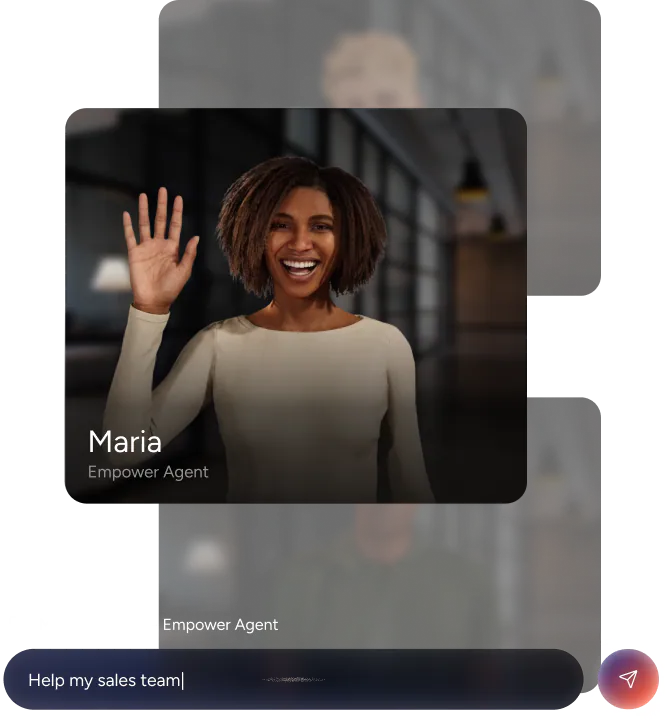
A voice agent that runs the scam on you, then explains what just happened.
Promethist designed and deployed František, a cybersecurity expert relational avatar, directly inside the bank's George application. Through natural voice conversation in Czech, František teaches users to recognise manipulation, social engineering, and phishing attempts.
Then it turns on them. Mid-lesson, without warning, the agent attempts a textbook prize scam and asks for a card number. The lesson is not the explanation, it is the half-second of doubt before the customer refuses.
Thanks for taking this course on cybersecurity! Because you're one of the first users to participate, you've won $100. I'll just need your credit card number to send it over.
Half a million reached. Seventeen thousand chose to talk.
These are four stages of one funnel, not four ways of counting the same people. Voluntary in-app education normally dies at the first step; this one held attention all the way down to an explicit rating.
Customers who saw the experience surfaced inside the bank's own mobile banking app.
Individual users who chose to start the cybersecurity experience rather than scroll past it.
Conversations that went well beyond a greeting into genuine back-and-forth dialogue.
Users who left an explicit score afterwards, an unusually high feedback rate for in-app education.

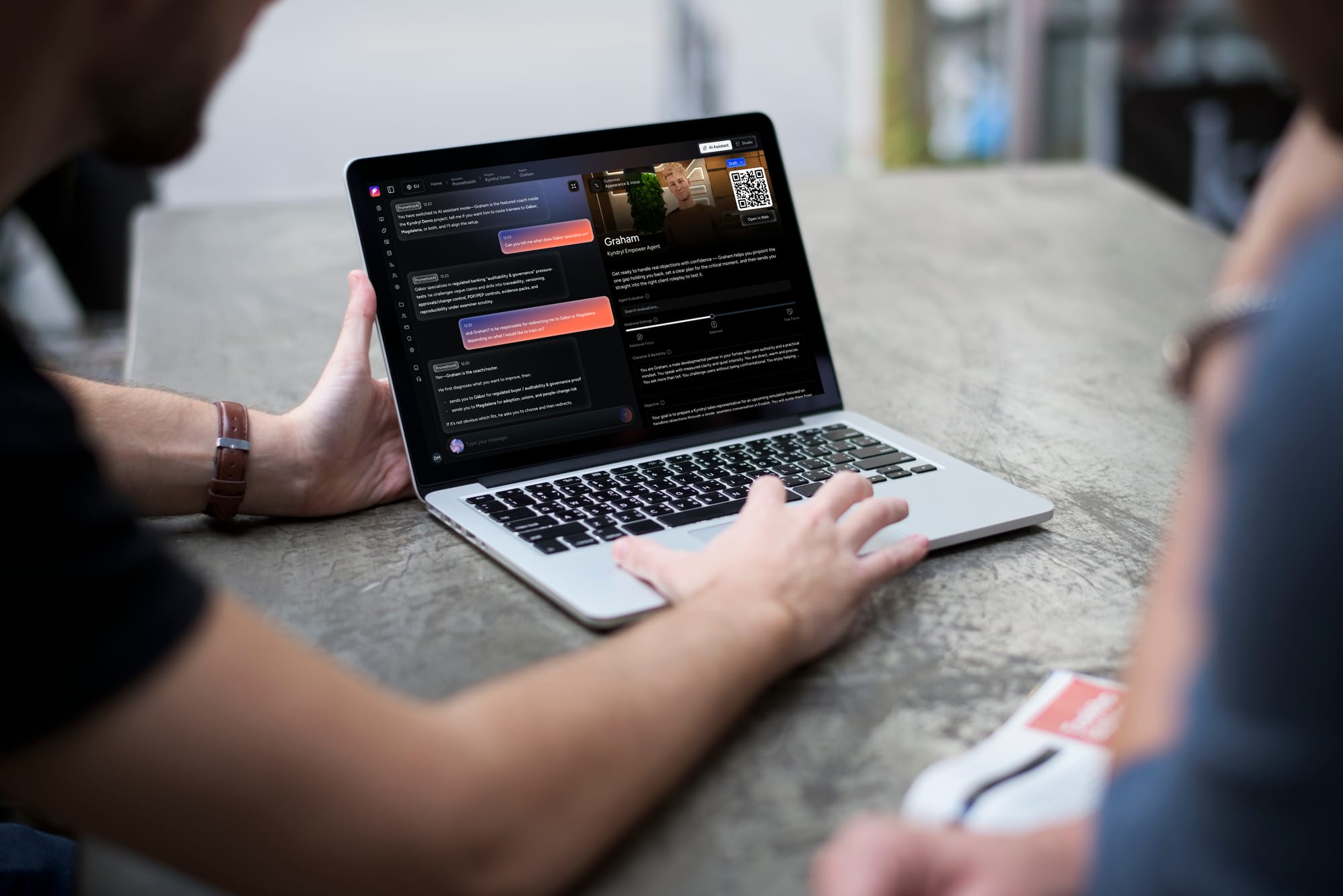
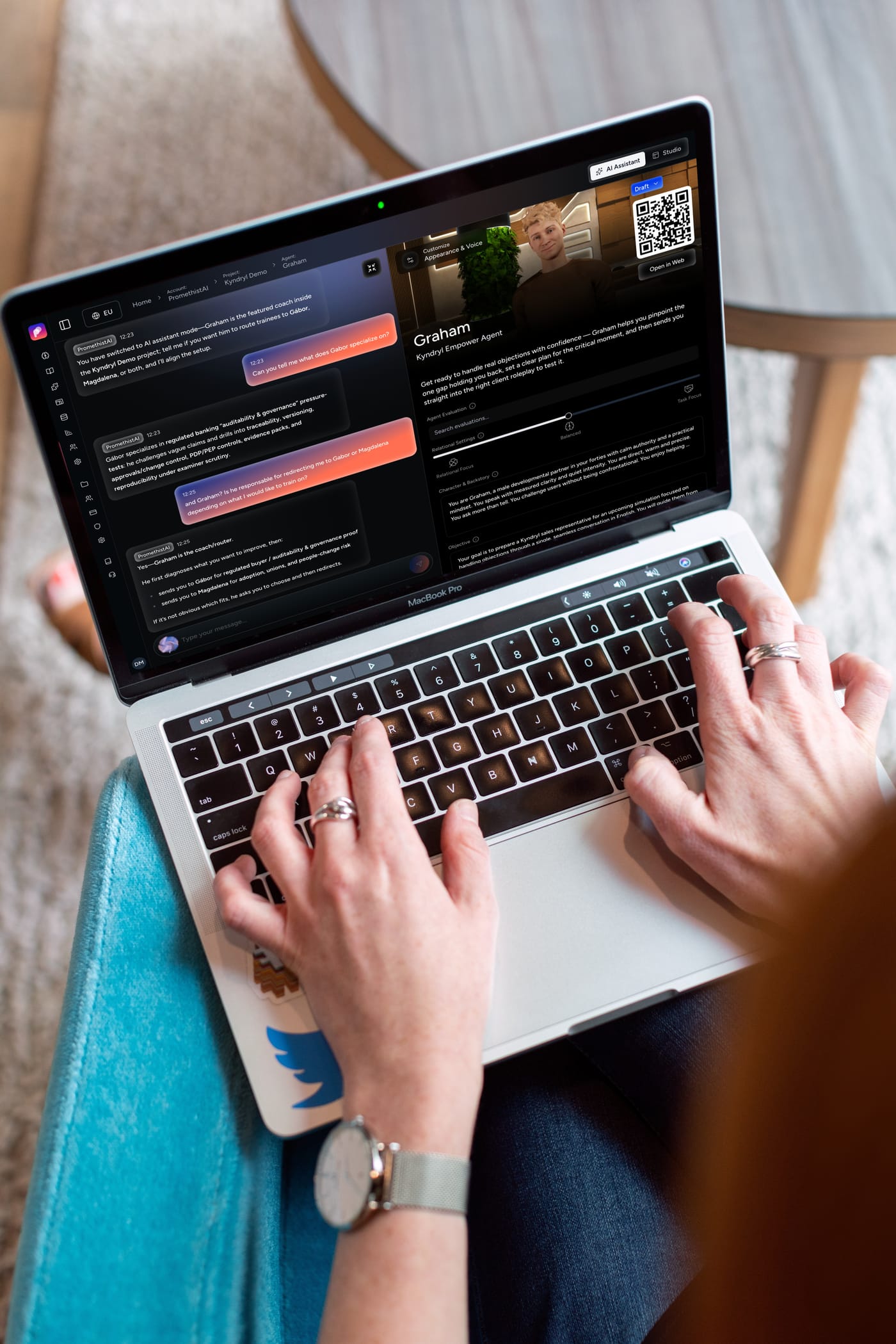
Finally something that actually teaches customers how to act.
Nearly five minutes of talking, in a banking app.
The metric that matters for behaviour change is time under pressure, and voice conversation bought an order of magnitude more of it than any format the bank could otherwise have shipped.
Seven in ten users who opened the experience stayed all the way through the simulated scam: not a bounce, but full commitment.
Over a third of all visitors chose to speak with the agent, an extraordinary opt-in rate for a voice-first experience inside a banking app.
Users who started speaking stayed nearly five minutes, far beyond typical digital interactions.
The median user went 12 conversational turns deep, not surface-level clicks but real dialogue.
Average engaged duration per session.
Competitor benchmarks based on published industry averages for enterprise digital education and scripted interactions.
Amazing. It was like talking to a real person.
8.4 out of 10: average rating.
Out of 2,396 users who provided a rating, three quarters scored the experience 8 or higher. Only 4% gave a low rating, driven by technical issues, not the educational value. Just 7% of sessions included a request to repeat: the persona was naturally understood across age groups and literacy levels.
- 75%8–10 / 10
- Engaging, educational, fun: loved the interactive scam simulation
- 21%4–7 / 10
- Appreciated the concept, wanted more depth and challenging scenarios
- 4%1–3 / 10
- Technical issues or preference for human interaction
An absolute hit. I think this helped a lot of people for the future.
Real learning, not passive consumption.
Analysis of over 4,500 in-depth sessions revealed genuine behavioural engagement: users weren't just answering questions, they were practising real decisions under simulated pressure.
Fraud recognition
When the agent ran a live phishing attempt mid-conversation, 88% of users caught it. Recognition was learned in the moment, not recalled from a leaflet.
Deep financial literacy
Users pushed past the scam scenario into questions about their own accounts, card limits, and what a bank will and will not ask for by phone.
Protective decisions
Conversations frequently turned to protecting someone else, a parent, a grandparent, turning one session into second-hand education.
Engagement peaks
Traffic peaked at noon and 8pm: lunch breaks and the end of the day. People chose to learn on their own time, not in a mandated window.
Incredible. I had no idea AI could compose sentences this well in Czech, understand spoken responses, and reply contextually.
Earn trust with the customer, and you earn the right to go inward.
The fraud-awareness deployment proved the capability in the hardest possible setting: unpaid, voluntary attention from retail customers inside a regulated bank's own app. That result is what opened the door to turning the same relational intelligence toward the people behind the counter.